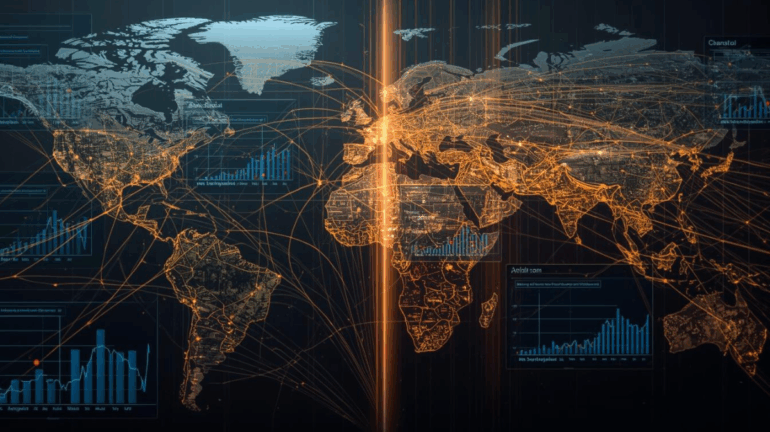

As artificial intelligence becomes deeply embedded in modern society, a pressing question emerges: Will AI become a force that bridges global inequality, or will it widen the divide between nations, industries, and individuals? While AI promises unprecedented economic growth, automation, and innovation, its benefits are not evenly distributed. Wealthier countries and large corporations often have the resources to build, train, and deploy cutting-edge AI systems, while developing economies may struggle to access the infrastructure, data, and talent required to compete. This imbalance raises concerns that AI could accelerate economic disparity creating an era where technological power becomes the new form of global inequality.
At the same time, AI has the potential to level the playing field by offering scalable, low-cost solutions that reach populations historically left behind. Whether AI becomes a bridge or a barrier depends on how global leaders, institutions, and industries adopt it. The future is not predetermined; it will be shaped by choices made today regarding access, governance, education, and ethical deployment.
One of the clearest areas where AI may widen inequality is automation. Jobs requiring routine manual or cognitive labor are highly susceptible to AI-driven displacement. Industries such as manufacturing, logistics, agriculture, and customer service could see significant workforce reductions as automated systems become cheaper and more efficient. High-income countries will adapt more easily, with governments capable of investing in retraining programs and advanced digital infrastructure. Low-income countries, however, rely heavily on manual labor sectors, meaning automation could disrupt their economies more severely, leaving millions unemployed and deepening poverty.
Access to AI tools is another critical issue. Advanced AI models require vast computational resources, high-quality datasets, and skilled engineers assets concentrated in a few countries and corporations. This creates a digital monopoly where technological advantage fuels economic dominance. As companies with advanced AI capabilities become increasingly powerful, a new divide forms: those who control AI and those who merely consume it. Without deliberate global collaboration and knowledge-sharing, the AI revolution may entrench existing power structures.
However, the story does not end there. AI also has extraordinary potential to reduce inequality, especially when applied to global challenges like healthcare, education, agriculture, and financial inclusion. For example, AI-powered diagnostics can bring expert-level healthcare to remote regions lacking specialists. Machine learning models can detect diseases from medical images, predict outbreaks, and recommend treatment plans offering capabilities that previously required highly trained professionals. In agriculture, AI can help small farmers optimize crop yields using satellite imagery, climate predictions, and soil analytics, reducing losses caused by droughts or pests.
Education may be the most transformative area. AI-powered tutoring systems can deliver personalized learning at scale, providing high-quality instruction to students regardless of location or economic background. By bridging gaps in teacher shortages and resource constraints, AI can help millions gain the skills needed for economic mobility. In nations where literacy and education levels remain low, AI could become a catalyst for widespread empowerment.
Financial inclusion is another domain where AI can reduce inequality. Billions of people worldwide lack access to traditional banking, but machine learning models can assess creditworthiness using alternative data such as mobile usage or transaction patterns. This opens doors to microloans, digital payments, and entrepreneurship, fostering economic growth in underserved regions. When combined with blockchain and mobile fintech platforms, AI can help build transparent, efficient financial systems in countries where corruption or inefficiency has historically hindered development.
But unlocking these benefits requires addressing key barriers. Data inequality is one major obstacle: nations with limited digital infrastructure cannot collect large datasets needed to train effective models. Investment in connectivity 5G access, cloud services, broadband networks—is essential. Education systems must also evolve, incorporating AI literacy, technical training, and workforce reskilling. If only a small elite understands or controls AI, inequality will worsen.
Ethical governance will also determine AI’s role in global fairness. Without regulations, AI systems may reinforce biases, create opaque decision-making processes, or enable surveillance that targets vulnerable populations. International cooperation is needed to build frameworks that protect human rights, enforce transparency, and ensure AI is used for public good rather than exploitation.
Ultimately, the future of AI and global inequality hinges on intentional choices. If developed nations hoard AI advantages, the world may see a widening technological gulf creating a new class divide defined by access to intelligent machines. But if governments, tech companies, and global institutions collaborate to make AI accessible, affordable, and equitable, it can become one of the most powerful tools for reducing poverty, expanding opportunity, and creating a fairer world.
Contributed By Guestposts.Biz