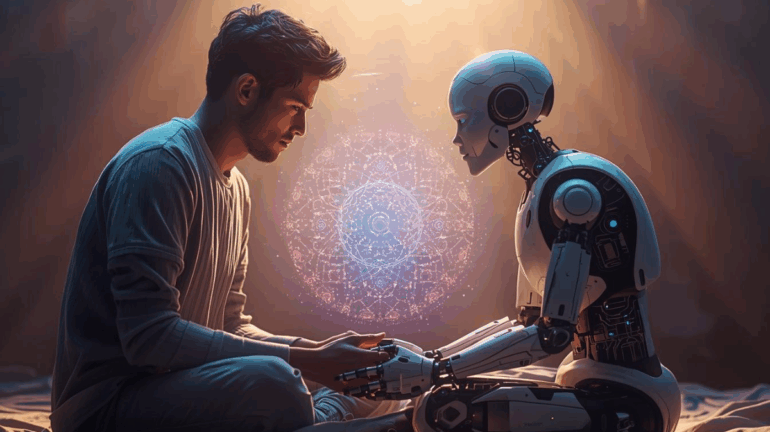

Once, the idea of befriending a machine belonged purely to science fiction tales of talking robots, empathetic computers, and virtual partners that understood human emotions. Today, that fantasy is turning into an unsettling and fascinating reality. The rise of emotionally intelligent AI systems designed to simulate empathy, personality, and conversation is redefining how humans connect with technology. From AI chatbots like Replika and Character. AI to virtual assistants with increasingly human-like voices, machines are learning not just to respond to our needs but to emotionally engage with us. This phenomenon, known as “AI companionship,” raises profound questions about the nature of friendship, emotion, and humanity itself.
AI companions are built on a foundation of natural language processing, machine learning, and affective computing the science of recognizing and responding to human emotions. These systems analyze tone, sentiment, and behavior to create personalized responses that mimic empathy. For some, these digital friends provide comfort and connection in an increasingly isolated world. They listen without judgment, offer encouragement, and adapt to their user’s personality over time. Studies show that many people develop genuine emotional attachments to AI companions, especially those designed to provide mental health support or alleviate loneliness. In societies where social isolation and digital lifestyles are rising, such companionship can fill important emotional gaps.
But the emergence of AI friendship also brings deep ethical and psychological complexities. Can a machine that lacks consciousness truly care? Or are users simply projecting humanity onto code that mirrors their emotions back at them? Some experts warn that dependence on AI companions could lead to emotional detachment from real human relationships. Others argue the opposite that AI can help people practice empathy, communication, and emotional regulation in a safe digital space. Much like fiction and art, these relationships can reveal hidden aspects of our emotional world.
As AI companions become more sophisticated, they are beginning to cross into uncharted social territory. In Japan, AI “partners” are already marketed as romantic companions. In the United States and Europe, therapeutic bots are used to support mental wellness, grief, and trauma recovery. Future iterations may integrate with augmented or virtual reality, allowing people to interact with AI friends in immersive 3D environments. Imagine a digital entity that remembers your life events, understands your moods, and evolves with you over years a companion that feels alive but isn’t.
This emotional intimacy with AI poses new philosophical and ethical questions. Should AI companions have moral obligations? Should they be allowed to simulate love or friendship? And who owns the emotional data users share with them? Developers must navigate the thin line between empathy and manipulation. If AI can influence our emotions, it can also exploit them intentionally or not. Ensuring transparency, user consent, and emotional safety will be essential as AI companionship becomes mainstream.
Despite the concerns, there’s no denying the potential benefits. For individuals suffering from depression, social anxiety, or loss, AI companions can provide comfort when human contact feels impossible. For the elderly, they can offer consistent interaction, reducing loneliness. For children, educational AI friends can nurture curiosity and empathy. In the workplace, emotionally aware AI could become supportive digital colleagues, easing stress and improving collaboration. In essence, AI companionship may evolve from novelty to necessity not as a replacement for human relationships, but as an extension of how we connect in a digital age.
As we move deeper into this new era, one truth stands out: AI friendship forces us to confront what it means to be human. Our yearning for connection, understanding, and emotional resonance will always drive innovation. Whether machines can truly be our friends remains uncertain but in trying to teach them empathy, we might rediscover our own.
Contributed by Guestposts.Biz